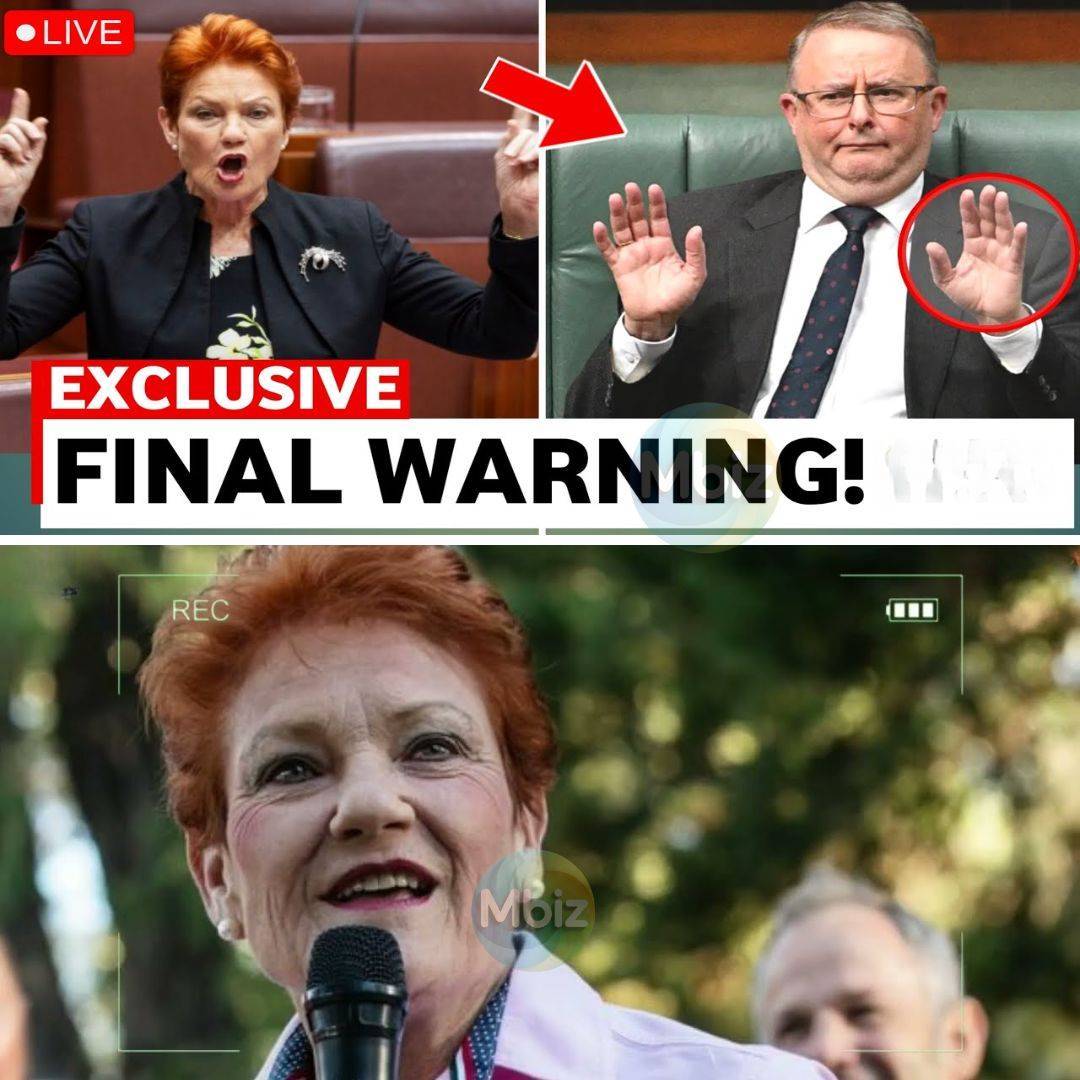
In a fiery Senate address, Pauline Hanson has unleashed a scathing critique of Prime Minister Anthony Albanese and his Labor government, exposing what she describes as their “shady schemes.” Her urgent warning highlights the dire state of Australia’s economy, escalating cost of living, and troubling national security decisions, leaving the Albanese administration on the defensive.
 Hanson’s remarks come at a critical moment as Labor grapples with a series of crises—rising housing costs, record immigration, and spiraling energy expenses. She argues that despite winning elections with a mere 35% primary vote, the government has failed to address these pressing issues effectively.
The senator’s speech paints a stark picture of economic mismanagement, with Australians facing skyrocketing electricity bills and ongoing taxpayer-funded renewable projects. “If this is the future, why does it feel so expensive in the present?” she challenged, underscoring the disconnect between government promises and reality.
 Hanson’s critique extends to national security, questioning Labor’s approach to alliances, particularly with the United States. She warns that Australia’s reliance on American defense funding could become a liability if the government continues to alienate its most important ally while seemingly courting adversaries like China.
The urgency of her message is palpable as she calls for a more robust understanding of defense responsibilities. “Alliances aren’t a free subscription,” she stated, stressing the need for Australia to step up and contribute to its own security rather than depend solely on foreign powers.

As the debate unfolded, the absence of Albanese loomed large, with Hanson’s pointed questions highlighting the need for accountability and leadership. “Where are the people who understand productivity in business?” she asked, suggesting that the government needs to engage with real business leaders to address Australia’s economic challenges.
 Throughout her address, Hanson maintained a blend of humor and seriousness, reminding her audience that while laughter is essential, the issues at hand require urgent attention. The political theater in the Senate reflects a growing frustration among Australians who feel their concerns are being ignored.
As the session concluded, the implications of Hanson’s words lingered in the air, prompting a reevaluation of the current administration’s direction. With the stakes higher than ever, the call for a clear statement of principles and decisive action resonates loudly across the nation.
In a time of increasing polarization, Hanson’s speech serves as a rallying cry for accountability and a reminder that democracy requires active participation, not passive observation. With so much at risk, the Australian public is left wondering if their leaders will rise to the occasion or continue to falter under pressure.